
One of the most important long-term economic questions facing developed economies is surprisingly simple: who will pay for government in the future?
For most of modern history, government finances have relied heavily on taxes from human labor. Individuals work, earn wages, and pay income and payroll taxes. Those taxes fund infrastructure, national defense, education, and social programs like Social Security and Medicare. The structure of government finance has therefore been closely tied to the structure of the labor market. When more people work and earn wages, tax revenues increase. When employment declines, tax revenues fall.
However, the economic landscape is beginning to shift in ways that could fundamentally challenge this system.
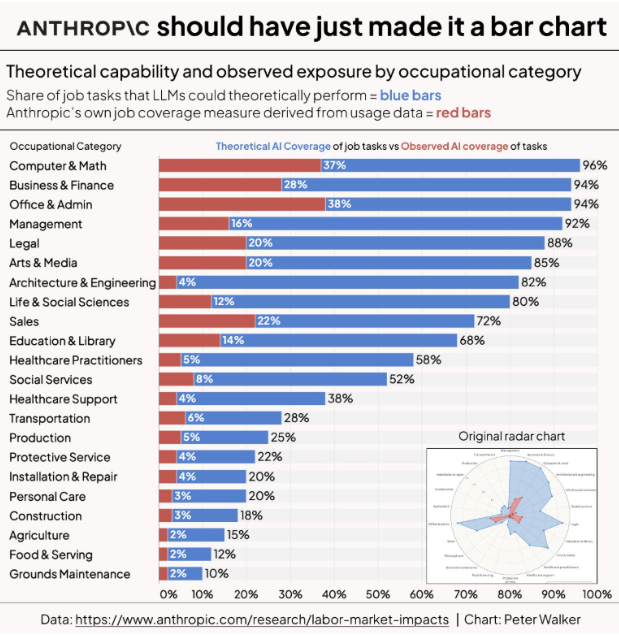
Two large forces are developing simultaneously. The first is automation. Artificial intelligence, robotics, and advanced software systems are increasing productivity across many industries while reducing the need for human workers in certain roles. The second force is demographic change. In most developed countries, populations are aging, meaning a growing share of citizens will rely on retirement benefits and healthcare programs funded by government.
When these two forces are combined, a structural tension begins to emerge. Fewer workers may be contributing to the tax base while more people depend on social benefits. If that trend continues over the next several decades, governments may face a difficult fiscal imbalance.
To understand the challenge more clearly, it helps to look at how governments are funded today. In the United States, roughly half of federal revenue comes from individual income taxes. Payroll taxes that support Social Security and Medicare account for about a third of revenue. Corporate taxes make up a relatively small portion, typically between seven and ten percent. The remainder comes from sources such as tariffs, excise taxes, and estate taxes.
This system worked well throughout much of the twentieth century because labor income represented the dominant source of economic production. Workers generated wages, wages were taxed, and government programs were funded from those taxes.
But if automation significantly reduces the role of human labor in the economy, the structure of the tax base may begin to erode. At the same time, capital ownership—meaning the ownership of companies, machines, algorithms, and technology—may represent a larger share of economic output.
This raises an important policy question: if income shifts from labor to capital, should the tax system shift as well? And if it does shift how does this affect financial planning?
One potential solution is increasing taxes on capital rather than labor. In an economy where automation generates a larger share of productivity, profits and investment returns may become the primary sources of income. Governments could attempt to capture more revenue from those sources through higher corporate taxes, capital gains taxes, wealth taxes, or taxes on large asset holdings.
The basic logic is straightforward. If machines and software generate the economic output, the owners of those machines and software receive the financial benefits. Taxing a portion of those gains could help support the social systems that rely on public funding.
However, taxing capital presents its own challenges. Corporations and high-net-worth individuals often employ sophisticated legal and accounting strategies to reduce their tax liabilities. Capital is also highly mobile. Companies can shift profits across jurisdictions or relocate operations to countries with lower tax rates. Because of this, economists increasingly emphasize the importance of international coordination. Recent discussions around a global minimum corporate tax represent early efforts to address these challenges, though implementing such policies across multiple countries remains complex. Critics, however, warn that taxing automation may discourage technological progress and reduce productivity growth. Historically, technological innovation has often created new industries and opportunities even as it replaced existing jobs.
Another approach that economists frequently discuss is a greater reliance on consumption taxes. Rather than focusing primarily on taxing income, governments tax spending instead like a sales tax but on a national level.
Many developed countries already use value-added taxes, or VAT systems, as a core component of their revenue structure. A VAT applies a small tax at each stage of production and distribution, ultimately being paid by the final consumer. In Europe, VAT rates commonly range from 10 to 20 percent. The United States is somewhat unusual among developed economies because it does not have a national VAT system. Consumption taxes have several advantages. They tend to be harder to avoid because they are collected at the point of purchase. They also capture economic activity regardless of whether income comes from wages, investments, or business profits. Even in a highly automated economy, people will continue to purchase goods and services. As a result, a consumption-based tax system could indirectly capture the economic output generated by automation. Some economists believe the United States may eventually adopt a moderate national consumption tax combined with lower income taxes, creating a broader and more stable revenue base.
Another potential model looks beyond taxation entirely and instead focuses on ownership. Some economists suggest that governments could own productive assets directly through sovereign investment funds. There are already examples of this approach. Norway operates one of the world’s largest sovereign wealth funds, built from oil revenues and invested globally. The returns from that fund help support the country’s public spending. Alaska’s Permanent Fund distributes dividends from oil revenues directly to residents.
In the future, governments could potentially establish investment funds that hold shares in major industries such as technology, infrastructure, and energy. Dividends from those investments could help fund social programs or public services. In effect, this approach converts national productivity into public income. If automation dramatically increases productivity, the economy may ultimately produce far more goods and services with fewer workers. In that environment, the challenge becomes less about production and more about distribution.
What seems increasingly clear, however, is that the economic structure that supported government finance for the past century may not look the same in the next one. As technology reshapes how value is created in the economy, governments will need to rethink how that value is taxed, shared, and distributed across society.
For wealth management, this would change how clients think about tax efficiency. Today much of tax planning focuses on minimizing income taxes through strategies like retirement account deferrals, Roth conversions, and capital gain timing. These accounts can provide flexibility if future tax regimes change. Estate and gifting strategies may become more relevant. If governments target large concentrations of capital, transferring wealth earlier or using trust structures could become more valuable tools in preserving family wealth across generations.